Water Quality for Hydroponics: What’s in Your Tap and When It Actually Matters

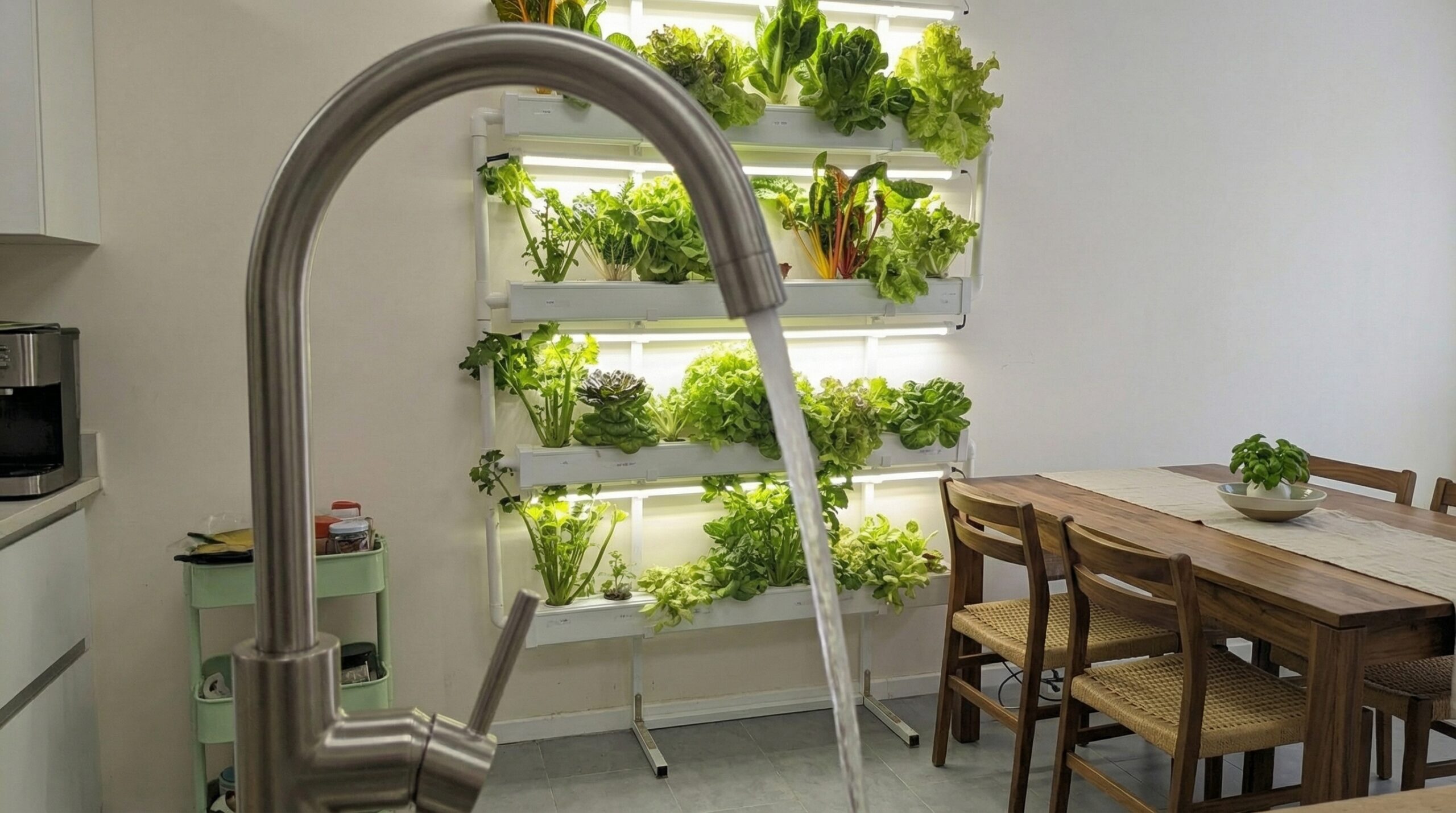
Here’s something that might surprise you: most home hydroponic growers use regular tap water, and their plants grow just fine.
I’m starting with that because when you search “water for hydroponics” online, the first thing you’ll find is a long list of everything that’s wrong with tap water. Chlorine. Chloramine. Heavy metals. Hard water. By the third paragraph, you’re convinced you need a laboratory-grade purification system before you can grow a single leaf of basil.
You don’t.
But you do need to understand a few things about what’s in your water, so you can recognize the rare situations where it might cause a problem and know exactly what to do about it. That’s what this article is for. Not to scare you. Just to give you the knowledge to act when it matters.
Your tap water is already pretty good
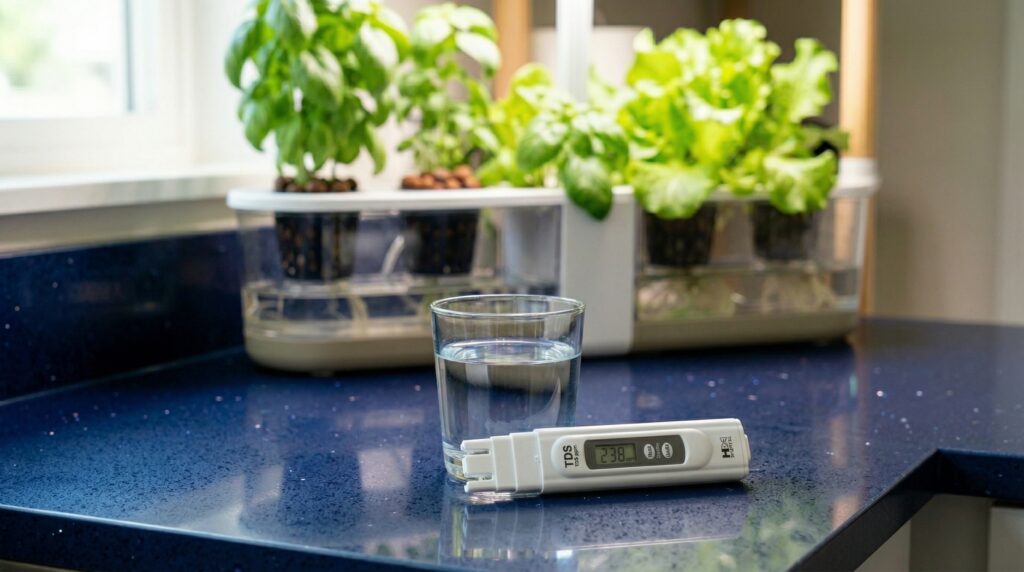
Municipal tap water is treated, tested, and regulated. It goes through filtration, disinfection, and quality checks before it reaches your faucet. For the vast majority of home growers, it works perfectly well as the base for a hydroponic nutrient solution.
The things that get added to tap water during treatment (mainly chlorine or chloramine for disinfection) and the minerals that are naturally present (calcium, magnesium, and others) are there in small amounts. Plants can handle small amounts. The question is only whether those amounts are high enough in your specific water to cause a noticeable issue.
Usually, they’re not.
The three things worth knowing about
You don’t need to become a water chemist. But understanding these three factors will cover 95% of anything water-related you’ll ever encounter in home hydroponics.
1. Chlorine and chloramine
Every municipal water system uses one of these to disinfect the water. They kill bacteria, which is great for drinking water. In a hydroponic system, high levels can stress plants and harm the beneficial microorganisms that help roots stay healthy.
Here’s the key word: high levels. The amount of chlorine in most tap water is low enough that many growers never notice any effect. Plants are not as sensitive as some articles make them sound.
When to pay attention: If you notice that young seedlings seem to struggle in the first few days after transplanting, or if you’re using beneficial bacteria products (like root inoculants) and they don’t seem to be working, chlorine or chloramine might be worth addressing.
What to do (easy fixes):
For chlorine: fill a bucket or container with water and let it sit for 24 hours before using it. Chlorine naturally dissipates into the air. If you leave it in sunlight, even faster. That’s it. No equipment needed.
For chloramine: this one is more stable and doesn’t evaporate on its own. If your municipality uses chloramine (you can find this in your annual water quality report, usually available online), you have two simple options. One: run the water through a basic activated carbon filter, which is the same kind used in common household water pitchers. Two: use a Campden tablet (available at any homebrew shop), where one tablet treats about 75 liters of water in seconds.
The honest truth: many experienced home growers skip this step entirely and never have a problem. If your plants look healthy and your roots are white, your water is fine as it is.
2. Water hardness (calcium and magnesium)
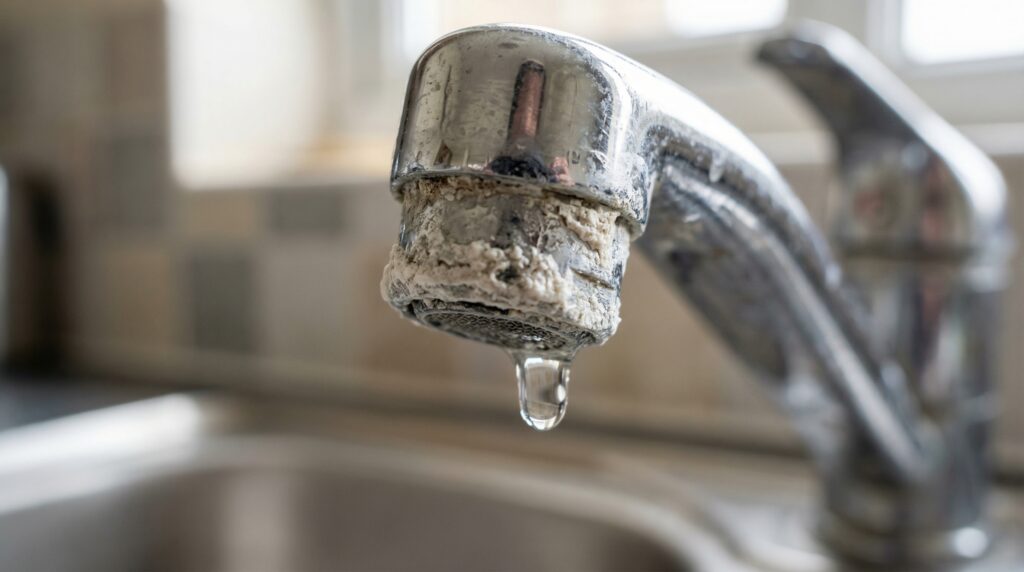
“Hard water” means your water contains higher-than-average levels of dissolved calcium and magnesium. You might already know if you have hard water because of the white scale that builds up on faucets and showerheads.
In hydroponics, some hardness is actually useful. Calcium and magnesium are nutrients your plants need. The issue only comes when the levels are so high that they throw off your nutrient balance or make it difficult to control pH.
When to pay attention: If your pH keeps drifting upward despite adjustments, or if you see white crusty buildup on your system’s channels or net pots, your water might be quite hard. Another clue: if your EC or TDS reading is above 200 PPM before you even add nutrients, that’s a sign there’s a lot of dissolved mineral content in your starting water.
What to do:
For moderately hard water (100 to 200 PPM): just use it. Reduce the amount of calcium and magnesium in your nutrient mix slightly to compensate. Most nutrient brands already account for some mineral content in tap water.
For very hard water (over 300 PPM): consider mixing your tap water 50/50 with distilled or filtered water to bring the baseline down. This is cheap and effective. You don’t need to eliminate minerals entirely, just bring them to a reasonable starting point.
For extremely hard water (over 500 PPM): a reverse osmosis (RO) filter becomes a worthwhile investment. These are not as expensive as they used to be, and a basic under-sink RO unit will give you clean water for years. But most home growers will never need one.
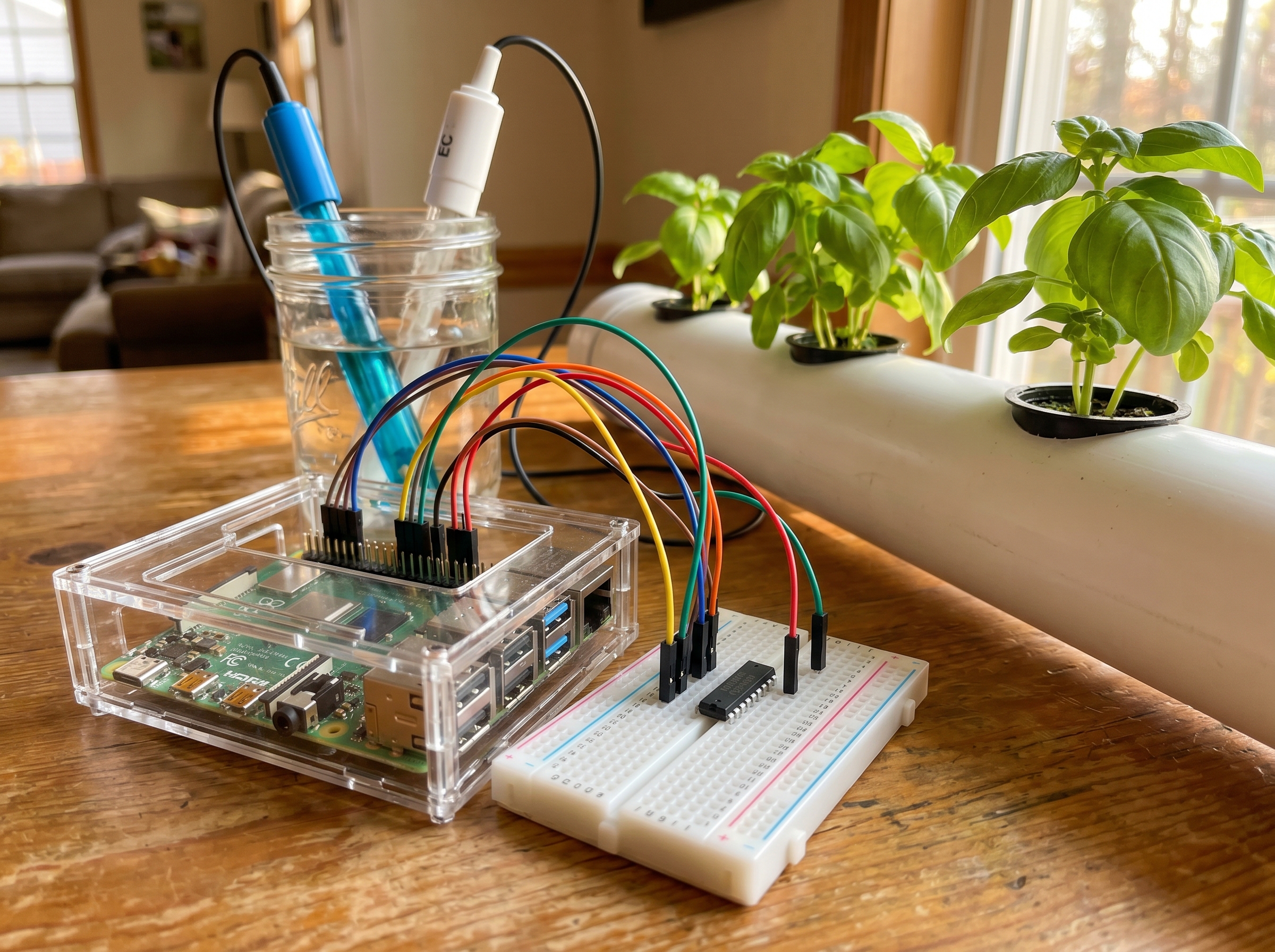
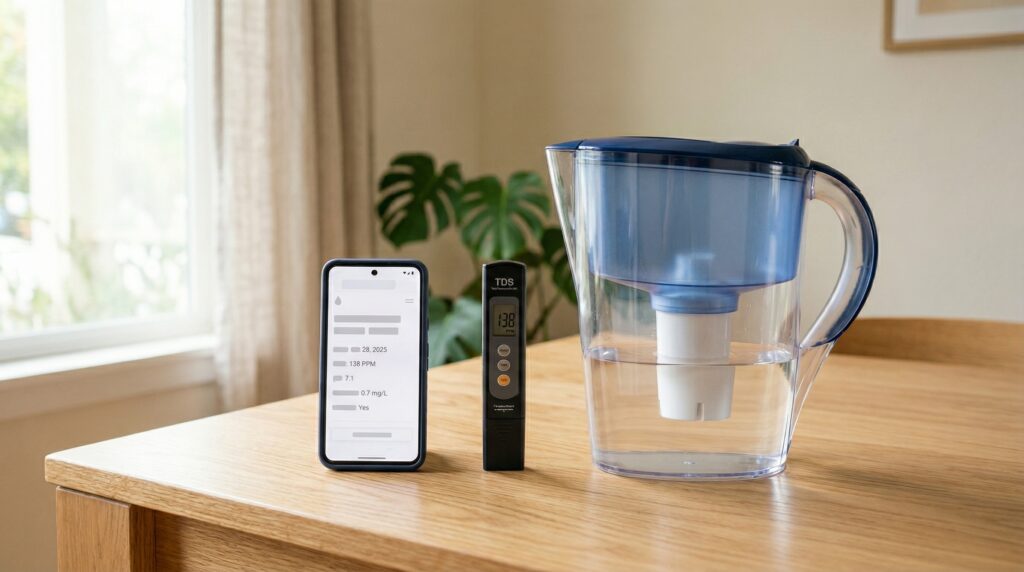
How to check: a simple TDS meter (about $10 to $15 online) tells you the total dissolved solids in your water in seconds. It’s the single most useful tool for understanding your water quality. Fill a glass from the tap, dip the meter in, read the number.
3. pH of your tap water
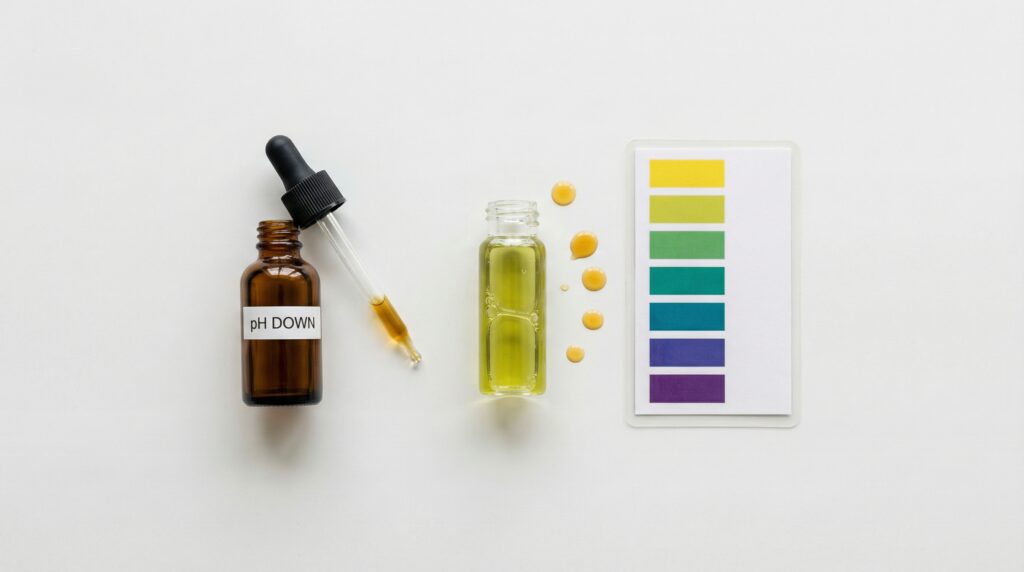
Water from the tap usually has a pH between 6.5 and 8.5. Hydroponic plants prefer their nutrient solution somewhere between 5.5 and 6.5, depending on the crop. So you’ll almost always need to adjust pH downward after mixing nutrients.
This is normal and expected. Every hydroponic grower adjusts pH. It’s not a “water problem,” it’s just part of the routine.
When to pay attention: If your starting water pH is very high (above 8.0), you’ll use more pH-down solution and the pH may be harder to keep stable. This is often connected to hard water (high calcium makes water more alkaline). If you address the hardness, the pH usually becomes more manageable.
What to do: test your water’s pH with a basic pH test kit or digital pH pen. Mix your nutrients first (they’ll drop the pH somewhat on their own), then adjust to the right range. Check every few days and adjust as needed. This takes about 60 seconds once you get used to it.
What about well water?
If your home uses well water instead of municipal water, the rules change a bit. Well water isn’t treated or regulated, which means it could contain anything from perfectly balanced minerals to high iron, sulfur, or even bacteria.
If you’re on well water, it’s worth doing a one-time water test before starting. You can use a mail-in test kit or take a sample to a local lab. Once you know what’s in your water, you’ll know whether to use it directly, filter it, or mix it with cleaner water.
The good news about well water: no chlorine or chloramine. The potential challenge: mineral content can vary a lot, so testing removes the guesswork.
What about rainwater?
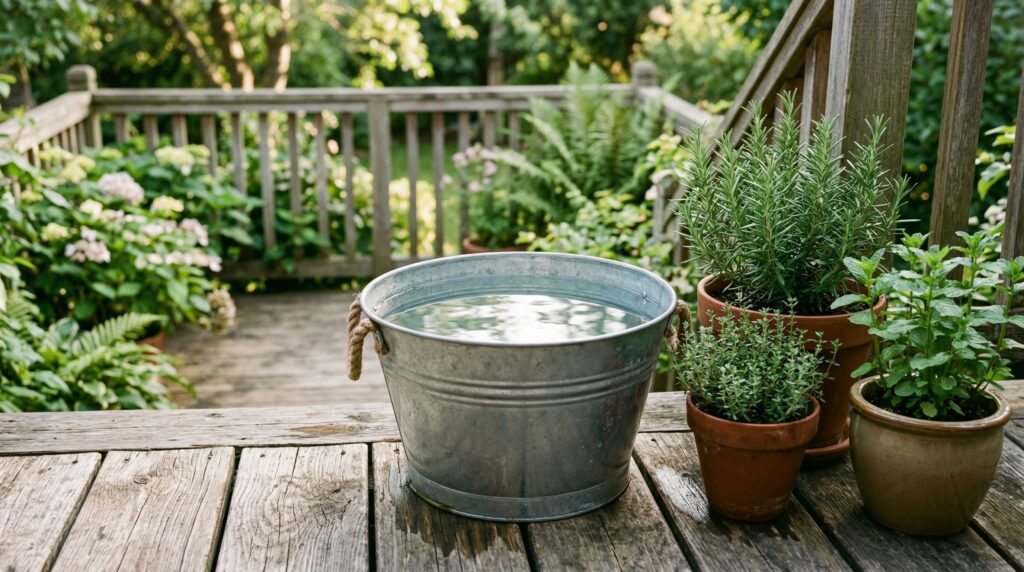
Rainwater is naturally soft and has almost no dissolved minerals, which makes it a great base for hydroponic nutrients. If you can collect it cleanly (from a roof that isn’t shedding chemicals or heavy debris), it’s an excellent free resource.
Just keep it covered to prevent mosquitoes and algae growth, and use it within a week or two.
A simple way to think about all of this
Here’s the framework I’d suggest for any home grower:
Step one (free, takes 5 minutes): Look up your local water quality report online. Search your city name plus “water quality report.” This will tell you whether your water uses chlorine or chloramine, how hard it is, and what the pH range is.
Step two ($10 to $15, one-time): Buy a TDS meter and test your tap water. If it reads under 200 PPM, you’re in great shape. Use it as-is, or let it sit out for a day if you want to clear chlorine.
Step three (only if needed): If your reading is over 300 PPM, or if you notice pH instability or white scale buildup, start mixing your tap water with distilled or filtered water. A simple carbon filter pitcher helps with chloramine too.
That’s it. Three steps, and you’ve covered everything.
What you don’t need to worry about
Heavy metals, fluoride, pharmaceutical residues, microplastics: these are real things in water, and they matter for other reasons. But in home hydroponics, at the concentrations found in treated municipal water, they are not causing your basil to droop or your lettuce to yellow. If your plants have a problem, it’s almost certainly nutrients, light, or pH before it’s a trace contaminant.
Don’t let water quality become a rabbit hole. For most home growers, tap water with a little awareness is all you need.
The bottom line
Good water doesn’t mean perfect water. It means water you understand. When you know what’s in your tap, you can make small, smart adjustments instead of expensive overreactions.
Fill your reservoir. Check your numbers. Grow your plants. If something seems off down the road, you’ll know exactly where to look.