
How to Grow Hydroponic Strawberries at Home (A Practical U.S. Guide)

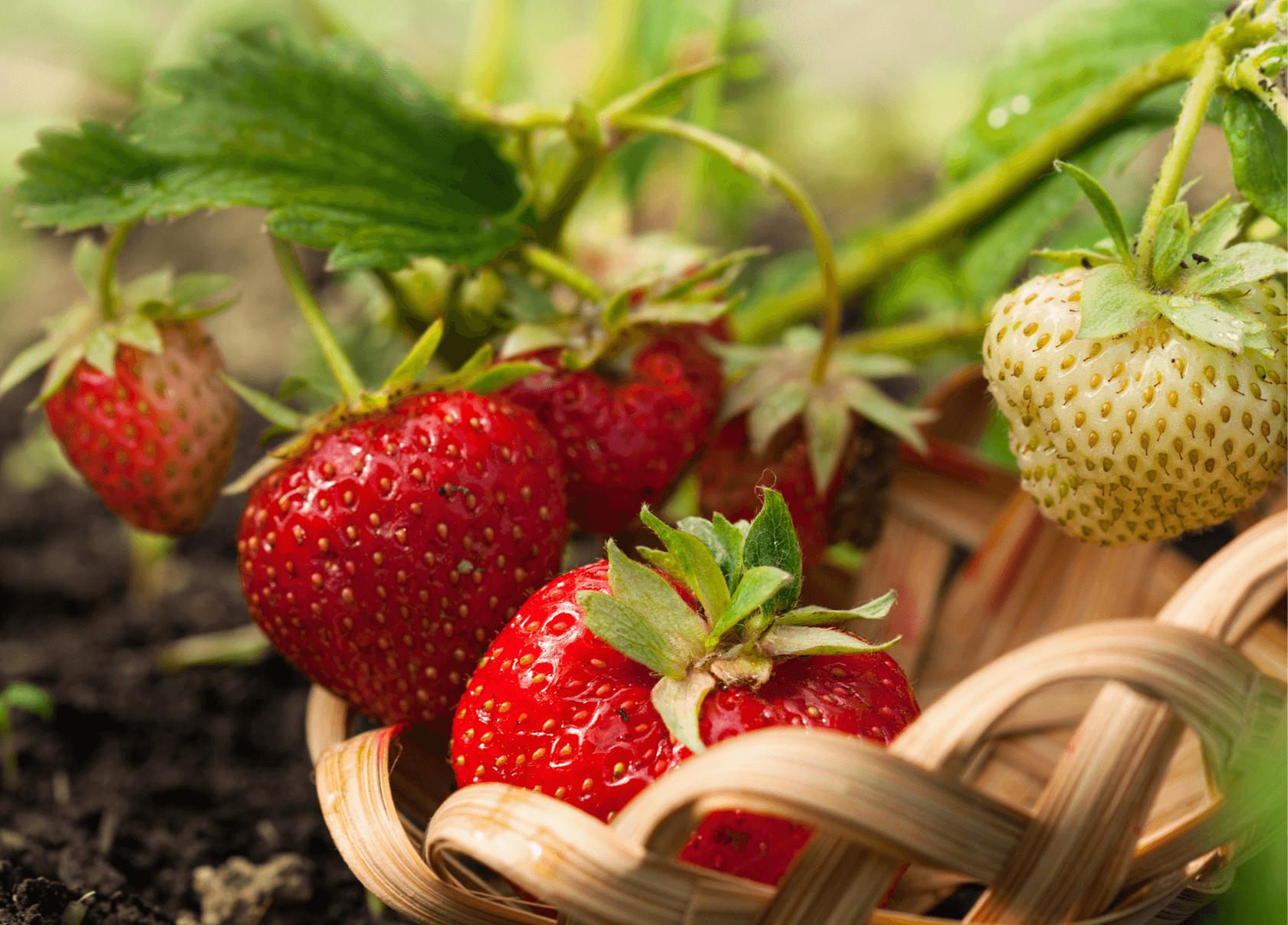
There’s a very specific kind of disappointment that comes from buying a beautiful box of strawberries, getting them home, and realizing they taste like water, bruise if you look at them wrong, and go soft two days later.
So you start thinking: maybe I should just grow them.
And then you try. And strawberries immediately humble you.
They’re not difficult because they’re “delicate.” They’re difficult because they punish small mistakes. Too much heat and they stop performing. Too much salt in the root zone and they sulk. Too much moisture around the crown and they rot. Even when everything is right, indoor plants can flower like crazy and still give you misshapen fruit if pollination is weak.
Hydroponics doesn’t magically make strawberries easy, but it does make them more controllable. That’s the real advantage: you can stop guessing, and start steering.
What hydroponics changes for strawberries
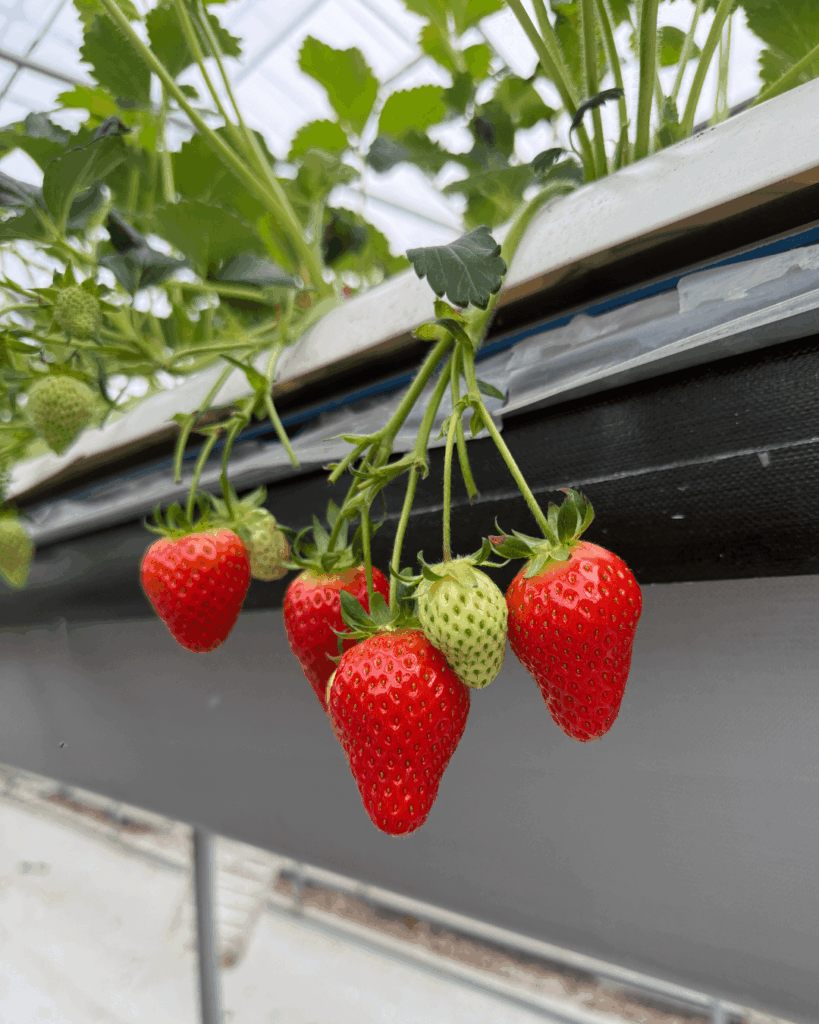
In soil, the fruit often ends up close to moisture, splashes, and soil microbes. In hydroponics, you’re naturally pushing the plant into a cleaner, lifted, “off-ground” style of growing that commercial strawberry systems often rely on (gutters, troughs, buckets, slabs).
You also get faster feedback. In a recirculating reservoir, your EC and pH numbers tell you what’s happening long before the plant looks miserable. That’s not a small thing with strawberries.
Start with the right plant type (this decision saves months)
If your goal is a short, seasonal run outdoors, June-bearing varieties can make sense. If your goal is “I want strawberries for a long stretch” or “I’m growing indoors or in a greenhouse,” day-neutral varieties are usually the simplest path.
Day-neutral strawberries are commonly used in protected production, and growers often choose them because they can keep flowering and fruiting under the right conditions. You’ll see varieties like Albion, San Andreas, and Monterey used in hydroponic or tunnel observations and trials.
If you’re buying plants in the U.S., many growers receive dormant bare-root plants in late winter and then wake them up for a couple of weeks before transplanting into the system.
You can also propagate your own plants from runners, but that’s a separate “multiplication” project. It’s worth doing later, once you’ve proven you can keep the plants happy.
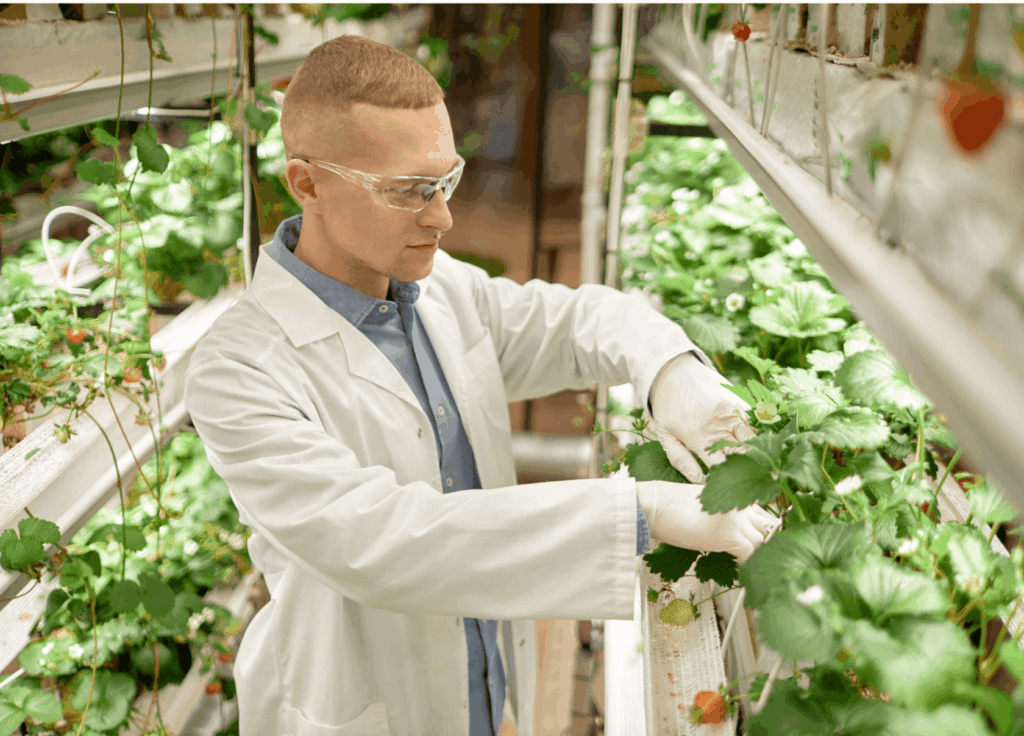
The environment strawberries actually want (in human terms)
Strawberries produce best when they feel like they’re living in a long, mild spring.
If you’re growing indoors or in controlled conditions, a useful target is daytime temperatures around 68 to 75°F and cooler nights, with the 24-hour average around the mid-60s°F range.
Heat is where most home strawberry attempts quietly fail. When temperatures stay high for long periods, plants often shift energy away from fruit quality and toward survival and vegetative growth (including runners). That’s why shade cloth, airflow, and not overheating your grow space matter more than people think.
Light matters too, but you don’t need perfection. A practical target for indoor strawberries is “bright enough that the plant doesn’t stretch and the flowers don’t abort.” In controlled-environment guidance, you’ll see daily light integral targets discussed in the teens to low 20s mol/m²/day range, with longer photoperiods used to support growth when intensity is lower.
Choose a system style that forgives you
Strawberries can grow in several hydroponic formats, but home growers usually succeed faster with substrate-based systems (drip irrigation into a small volume of inert media) rather than ultra-sensitive bare-root channels.
Gutters, troughs, buckets, slabs, and bags with media like perlite or coco coir are all used in hydroponic strawberry setups.
NFT can work, but it’s less forgiving when something goes wrong. In drip systems, you can correct faster because the root zone has some buffer.
No matter the system, keep this mental model: strawberries want moisture and oxygen, but not swampy saturation.

Nutrients: EC and pH without the drama
EC is simply a proxy for dissolved salts in the solution. Higher EC means more total salts; too high creates osmotic stress and imbalance, too low starves growth.
pH controls nutrient availability, and your tap water’s alkalinity can push pH upward over time.
Here’s the part that’s confusing online: you’ll see different “correct” EC numbers for strawberries depending on the system, the cultivar, and whether the advice is for research greenhouses or mixed-crop tunnels.
Some controlled-environment guidance for strawberries keeps nutrient solution EC at about 1.0 dS/m (1.0 mS/cm) or lower, with pH around 5.5 to 6.0.
Other hydroponic tunnel observations have run strawberries around EC 1.8 mS/cm with pH around 6.6.
General hydroponic crop tables also list strawberry ranges around EC 1.8 to 2.2 with pH about 6.
So what should a home grower do with that?
A practical starting point for most home systems is a nutrient solution around pH 5.8 to 6.0 and EC about 1.0 to 1.2 mS/cm, then adjust based on how the plant responds.
If the plant looks pale, growth is weak, and new leaves are small, you can step EC up gradually. If leaf tips burn, margins look scorched, or growth stalls after feeding, back EC down and dilute with clean water. The point isn’t chasing a number. The point is keeping the plant in a stable, comfortable zone.
One more nuance that matters: if your tap water EC is already high, your final EC target should account for that baseline. Testing water pH, EC, and alkalinity is the first serious step to not fighting your system every week.
How to measure and correct, simply
Measure EC and pH after the reservoir is mixed and circulating for a few minutes.
If EC is low, add nutrient concentrate, mix, then recheck. If EC is high, dilute with water, mix, then recheck. This is the standard EC management loop.
Then handle pH. If your pH is high, adjust slowly, wait, and recheck because pH changes take a moment to stabilize.
When to “reset” the reservoir
Over time, recirculating solutions drift. Plants take up nutrients unevenly, and water chemistry pushes pH around.
A reasonable home rule is a full solution refresh every 2 to 4 weeks, sooner if you’re in heat, running a small reservoir, or pushing heavy fruiting.
Planting depth: the crown rule that prevents rot
This is one of those details that feels small until it wipes out the plant.
Keep the strawberry crown above the wet media line. If you bury the crown or keep it constantly wet, you invite crown and root rots.
Think of the crown as a “collar.” Roots want moisture. The crown wants air.
Pollination: the silent reason berries come out weird
If you grow outdoors, insects and wind usually do enough. Indoors, it’s different.
Strawberry flowers need pollination, and uneven pollination often shows up as misshapen fruit. Controlled-environment guidance describes wind vibration and mechanical vibration as practical options for small-scale indoor production, with frequent repetition during flowering.
For a home setup, this can be as simple as a small fan providing airflow plus a quick, gentle vibration method a few times per week when flowers are open. You’re not trying to work hard. You’re trying to not leave fruit formation to chance.
Pruning: the difference between “a plant” and “a fruit machine”
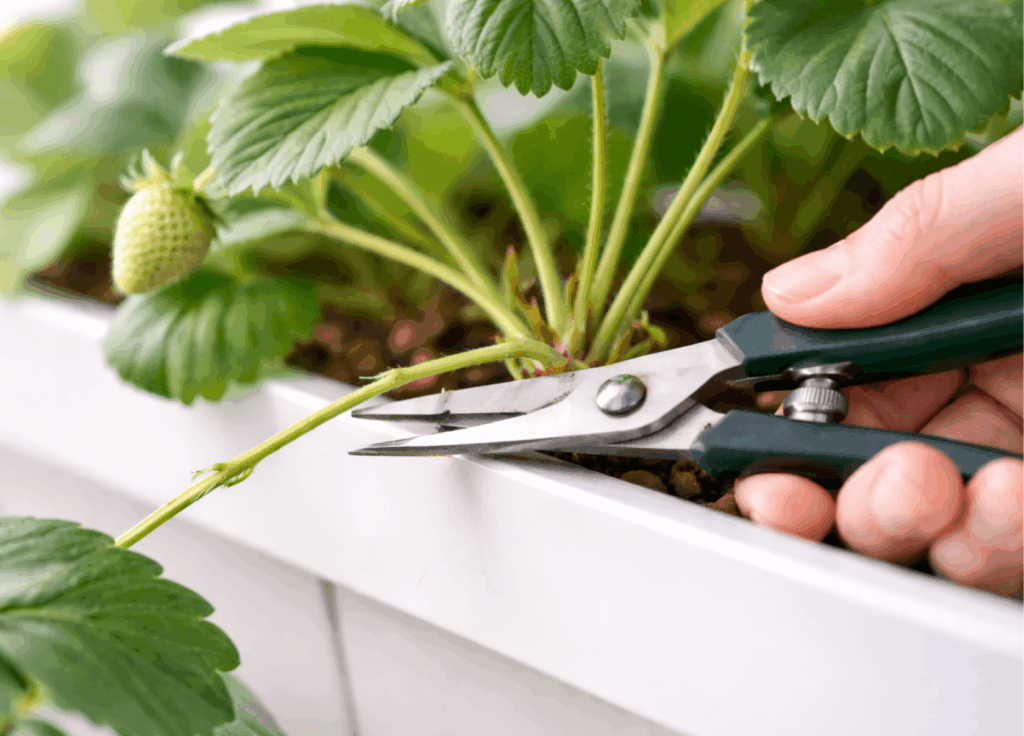
Strawberries constantly try to multiply themselves. That’s what runners are for. If your goal is fruit, runners are often a distraction.
Guidance for garden strawberries recommends removing runners to keep the plant focused on crowns and fruit, and removing older leaves (and any diseased leaves) to reduce disease pressure.
In controlled environments, runner management is also treated as a core crop-management task, not an optional aesthetic choice.
The simplest habit is this: once a week, remove runners you don’t need, remove leaves that are damaged or touching wet surfaces, and keep the plant open enough that air can move through it.
So what makes hydroponic strawberries “better” in the end?
It’s not that hydroponics makes strawberries more “special.” It’s that it removes the most common failure points: dirty fruit, inconsistent moisture, and guesswork nutrition.
When you get the basics right, strawberries pay you back fast. Not just with yield, but with that moment you can’t buy at a store: picking a berry at full color, still warm from the light, and realizing it finally tastes like what you hoped strawberries were supposed to taste like.

Danny
Danny writes beginner guides at Water Cultures. Self-taught and based in Minneapolis, he got into hydroponics because he wanted fresh peppers year-round. He killed three rounds of basil before anything survived. His articles are for the person Googling hydro problems at midnight.