Can You Grow Different Crops Together in the Same Hydroponic System?

Shared reservoirs save space and simplify management. But not all crops are good neighbors. Here’s how to decide what can share and what should be separated.
One of the most practical questions in home hydroponics is whether different crops can run on the same nutrient solution. If you have one system with 20 plant sites, filling all of them with lettuce feels wasteful when you also want basil, kale, and maybe a few strawberries.
The honest answer: some combinations work beautifully. Others create a compromise where every crop performs worse than it would on its own. And a few combinations actively sabotage each other.
The core principle: crops that share similar needs can share a system
Compatibility in a shared hydroponic system comes down to four factors:
- Nutrient strength (EC). Crops that need similar EC ranges can share a reservoir without either being underfed or overfed.
- pH preference. Most edible crops overlap in the 5.5 to 6.5 range, so this is rarely the problem.
- Growth rate and root mass. Fast, aggressive growers can crowd out slower ones.
- Growth stage. Vegetative crops and fruiting crops have different nutrient ratio needs.
The last point is the one most growers underestimate. A shared reservoir can only deliver one nutrient ratio. If half your plants want high nitrogen (leafy greens) and the other half want high phosphorus and potassium (flowering tomatoes), one group will always be compromised.
Combinations that work well
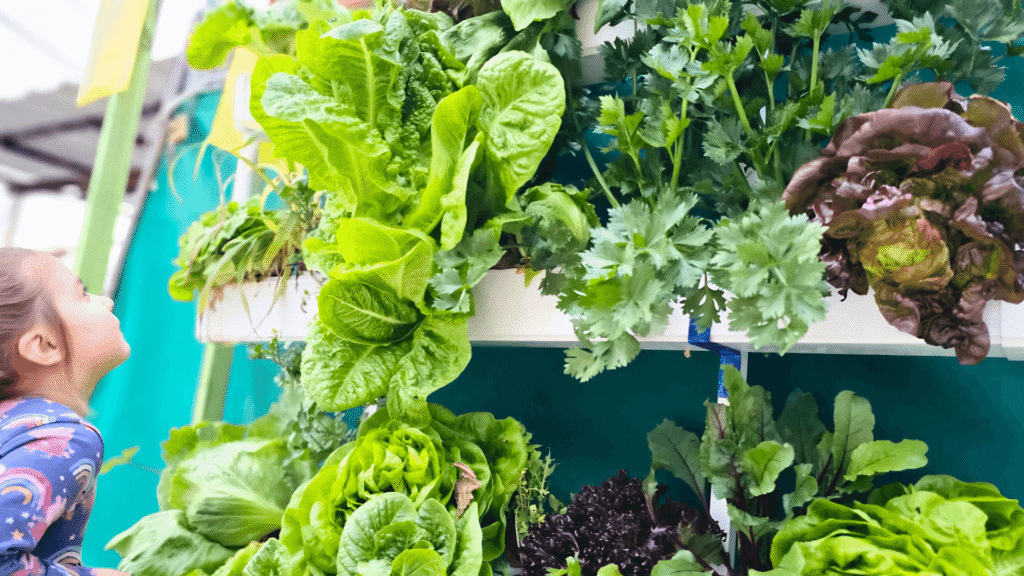
Leafy greens together. Lettuce, spinach, kale, arugula, bok choy, Swiss chard. All want low to moderate EC (0.8 to 1.6), all thrive on nitrogen-heavy nutrition, all stay in the vegetative stage permanently. This is the easiest and most reliable shared-system approach.
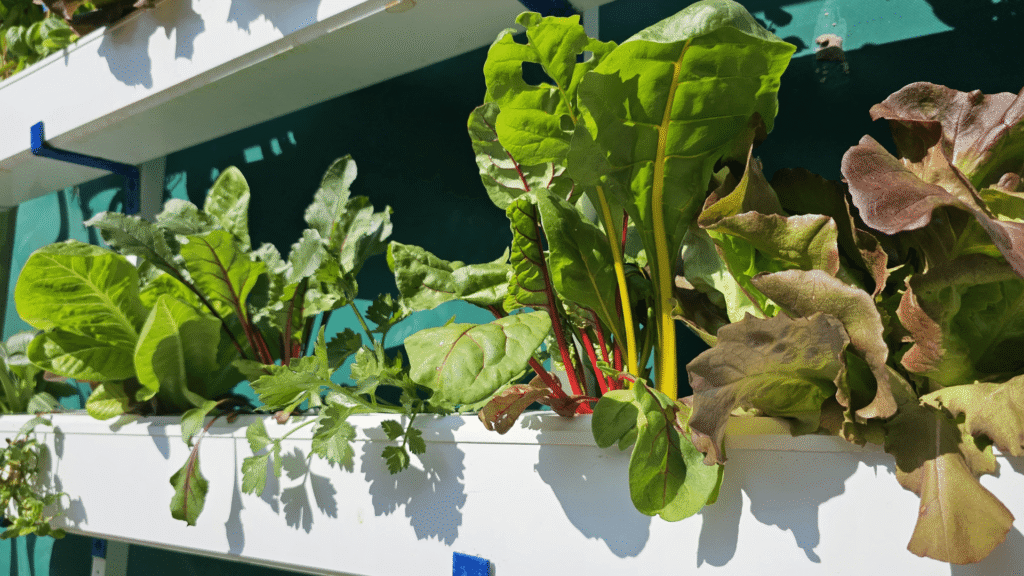
Herbs together. Basil, cilantro, parsley, dill, chives, oregano, thyme. Similar nutrient needs, similar growth habits. Basil grows faster and larger than most herbs, so give it a bit more space.
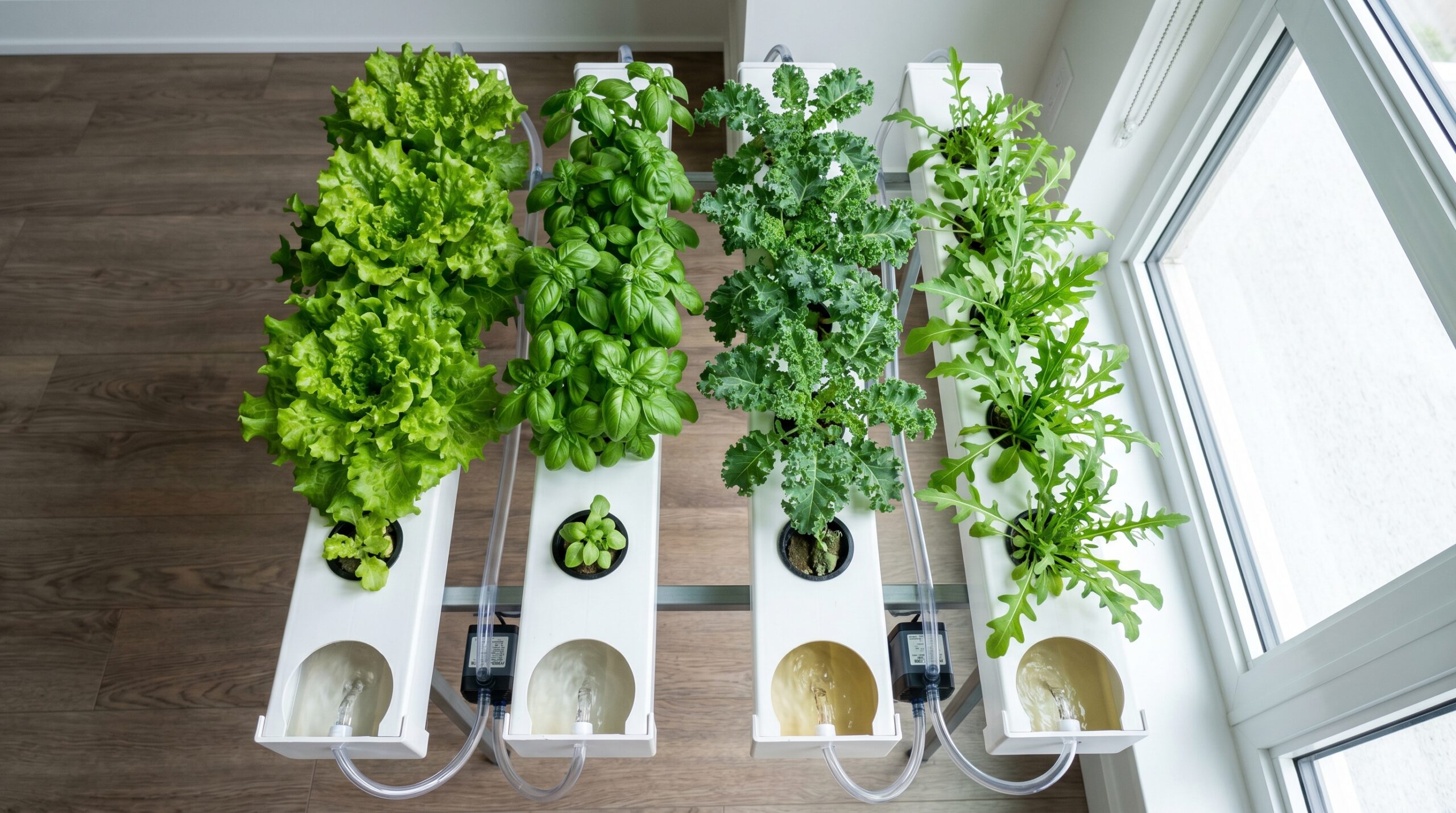
Leafy greens + herbs. Lettuce and basil in the same system is one of the most common and successful combinations in home hydroponics. Their EC ranges overlap, their pH preferences are identical, and neither requires a nutrient formula change.
Strawberries + herbs. Strawberries prefer a moderate EC (1.0 to 1.6) that aligns well with most herbs. Both stay relatively compact.
Combinations that require compromise
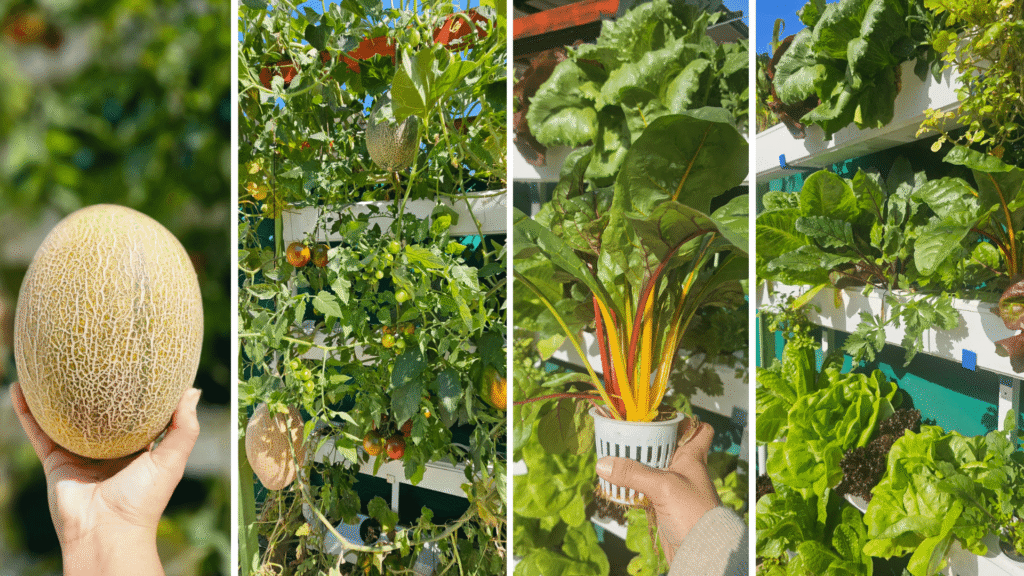
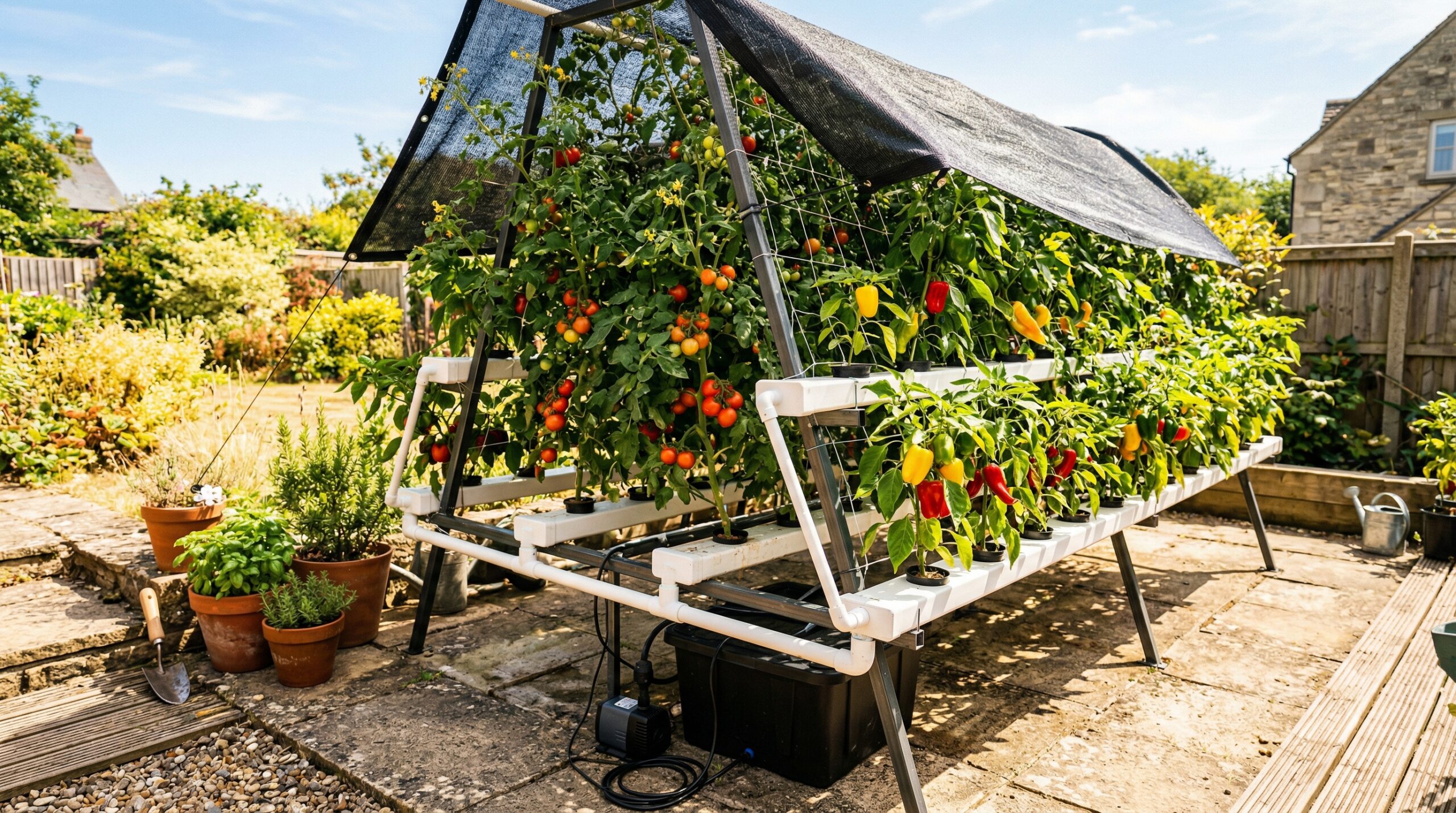
Leafy greens + fruiting crops on the same reservoir. This is where most shared systems fall apart. The leafy greens want higher nitrogen relative to phosphorus/potassium. The fruiting crops want the opposite once they begin flowering. Running both on a standard grow formula means the fruiting crops get more nitrogen than they need (producing lots of leaves, few fruit) while a bloom formula would short-change the greens.
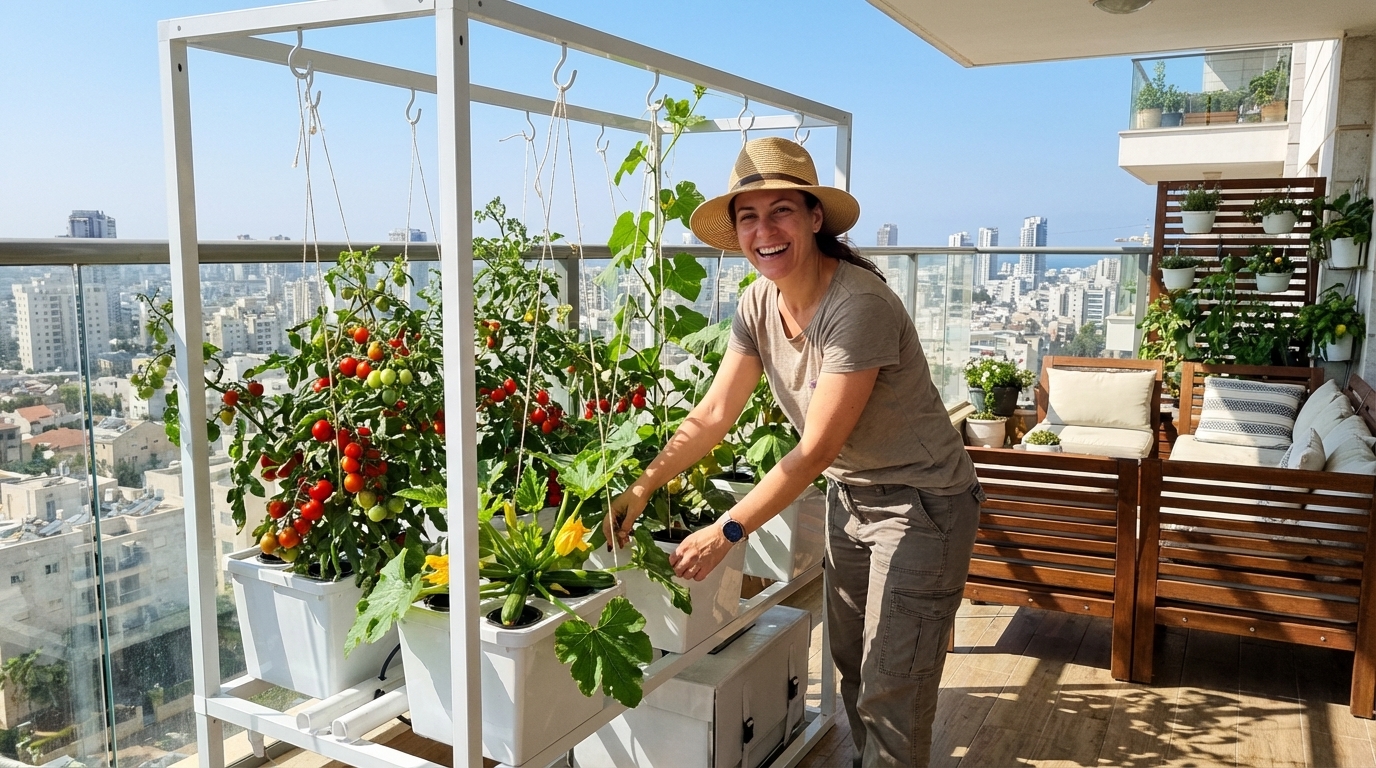
The workaround: keep the reservoir on a grow formula and accept that your fruiting crops will produce less than they would on a dedicated bloom formula. This works well enough for cherry tomatoes and peppers that are already in an established fruiting cycle, but it’s not ideal for maximizing harvests.
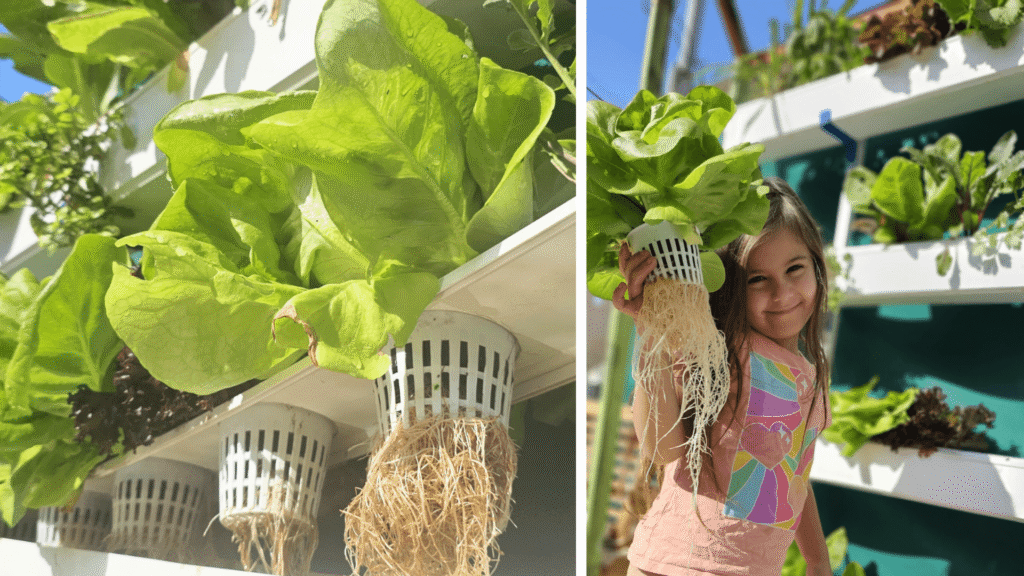
Fast growers + slow growers. Mint in the same system as lettuce seems logical (both are leafy, both like similar EC), but mint’s root system grows aggressively and can block channels, steal nutrient flow, and physically crowd out neighboring plants. The same applies to any crop with an especially vigorous root system.
Combinations to avoid
Large fruiting crops + small greens on shared channels. A tomato plant’s root mass after 8 weeks will fill an NFT channel and starve anything downstream. If you want to mix crop types, use a system where each plant has its own container (like Dutch Buckets) connected to a shared reservoir, so roots don’t compete for physical space.
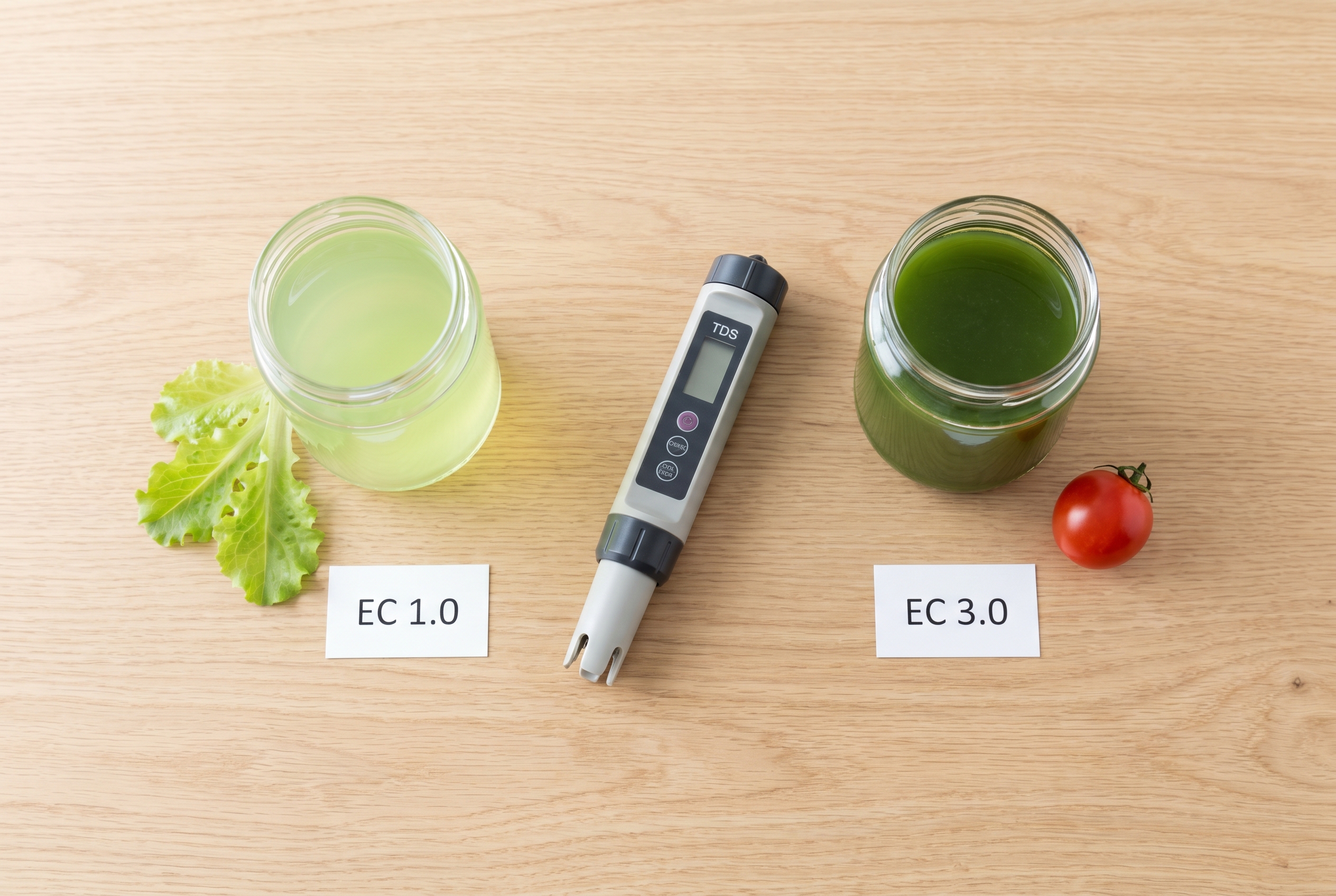
Crops with dramatically different EC needs on the same reservoir. Running delicate lettuce (EC 0.8 to 1.2) alongside heavy-feeding tomatoes (EC 2.5 to 3.5) means one crop is always being fed incorrectly. The lettuce will show tip burn from excess nutrients, or the tomatoes will underperform from insufficient feeding.
The practical decision framework
Ask these three questions before combining crops:
- Do they want similar EC? If the ranges overlap by at least 50%, they can share. If one crop wants EC 1.0 and the other wants EC 3.0, separate them.
- Are they all vegetative, or is one fruiting? All-vegetative mixes are simple. Mixed stages create nutrient ratio conflicts.
- Will one physically overpower the other? Consider root mass, canopy size, and growth speed. Pairing a mint plant with microgreens is asking for trouble.
If all three answers are favorable, the combination will work. If one is marginal, it can still work with monitoring. If two or more are mismatched, grow them separately.
What experienced growers actually do
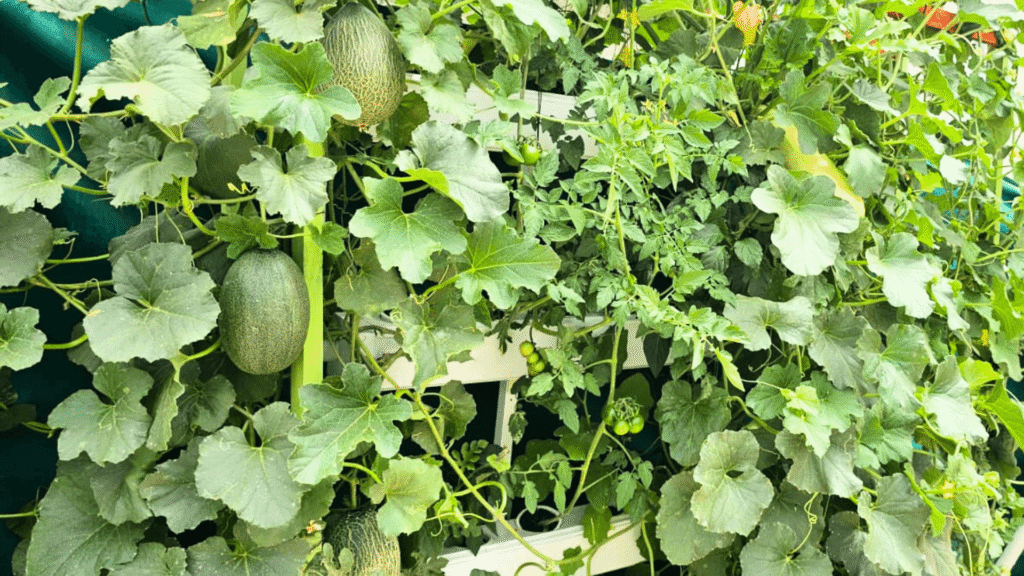
Most experienced home growers run two systems: one for leafy greens and herbs (simple, low EC, one formula), and one for fruiting crops (higher EC, bloom formula switch, more maintenance). This takes slightly more space but eliminates all compatibility issues and lets each crop perform at its best.
Growers with only one system tend to stick with all-leafy or all-herb gardens, rotating in new plants as older ones are harvested. This approach is simpler and consistently productive.
Key takeaways
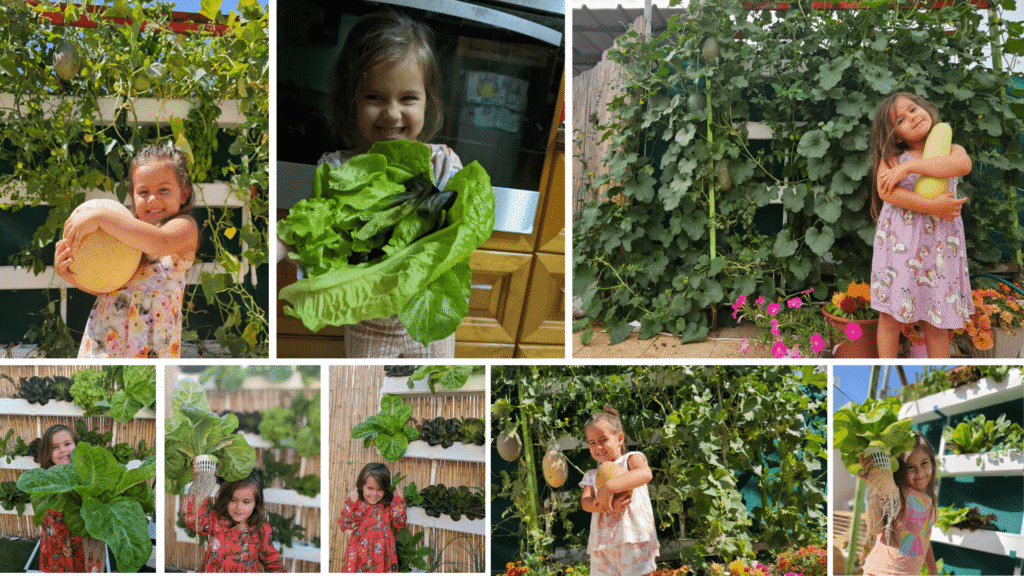
- Crops with similar EC needs, similar growth stages, and compatible root mass can share a system successfully.
- Leafy greens + herbs is the most reliable shared-system combination.
- Mixing vegetative crops with fruiting crops on the same reservoir forces a nutrient compromise that reduces performance for one or both groups.
- Root mass competition is a physical problem, not just a nutritional one. Fast, aggressive root growers can crowd out neighbors.
- When in doubt, run two separate systems. The simplicity gain is worth the small extra cost.