Growing Bell Peppers Hydroponically: A Complete Guide to Color, Flavor, and Year-Round Harvests


There’s something deeply satisfying about watching a bell pepper change color on the vine. What starts as a small green fruit slowly transforms into a vivid red, orange, or yellow, each shade sweeter and more nutritious than the last. And when you’re growing hydroponically, you get to witness that transformation without the unpredictability of outdoor seasons.
Bell peppers are one of the most rewarding crops you can grow in a hydroponic system. They’re colorful, packed with vitamins, and surprisingly straightforward once you understand what they need. Let’s walk through it.
Why Bell Peppers Work So Well in Hydroponics
In soil, bell peppers can be finicky. They’re sensitive to temperature swings, prone to soil-borne diseases, and dependent on a narrow growing season. Hydroponics removes most of those variables.
With a controlled environment, you can grow peppers year-round, deliver nutrients directly to the roots, and avoid the pests and inconsistencies that come with traditional gardening. The result? Better flavor, higher yields, and fruit that’s genuinely more nutritious.
The Health Side of Things
Bell peppers are nutritional overachievers. They’re loaded with vitamin C (red peppers have more than oranges), rich in beta-carotene for eye health, and full of antioxidants that support your immune system and skin. Growing them yourself means harvesting at peak ripeness, which is when those nutrients are at their highest.

Understanding the Growing Cycle
Bell peppers aren’t the fastest crop, but the timeline is predictable and manageable:
Germination takes roughly 7 to 21 days. Some varieties are quicker than others, so patience here pays off.
Seedling to mature plant requires about 45 to 60 days. This is the vegetative stage where your plant builds the structure it needs to support fruit later.
Flowering and fruit development spans 55 to 70 days. You’ll see small white flowers appear, followed by tiny green peppers that gradually size up.
First harvest typically arrives 60 to 90 days from seeding, depending on variety and conditions.
Getting the Environment Right
Temperature
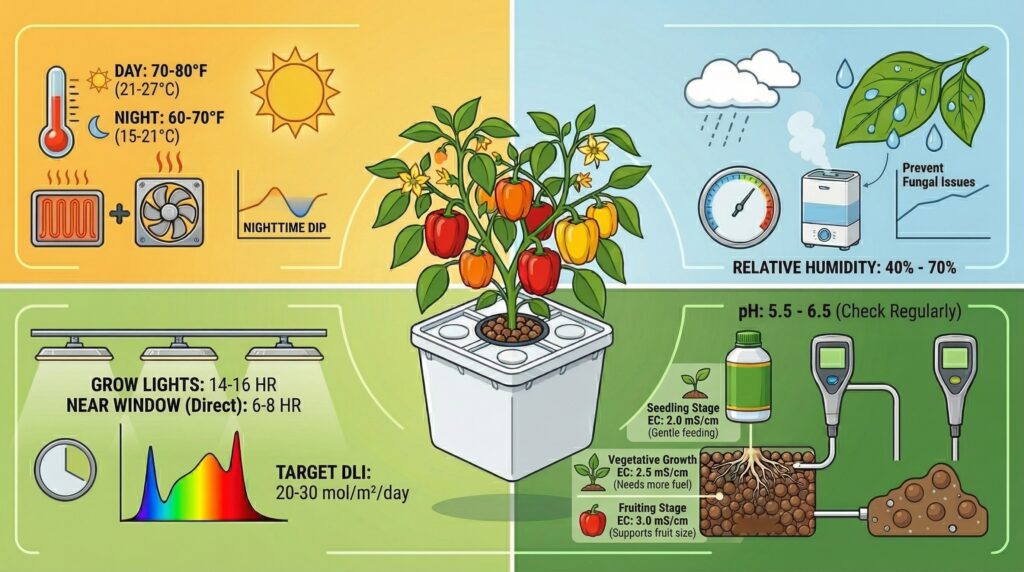
Bell peppers like warmth, but not extreme heat. Aim for daytime temperatures between 70°F and 80°F (21°C to 27°C), dropping to 60°F to 70°F (15°C to 21°C) at night. That nighttime dip actually helps the plant rest and redirect energy toward fruiting.
Humidity
Keep relative humidity between 40% and 70%. Too low and the plant struggles with transpiration. Too high and you invite fungal issues. A small fan for air circulation goes a long way.
Lighting
Bell peppers need plenty of light: 6 to 8 hours of direct sunlight if you’re near a window, or 14 to 16 hours under grow lights for indoor setups. If you’re using artificial lighting, target a DLI (Daily Light Integral) of 20 to 30 mol/m²/day. That range keeps photosynthesis humming without stressing the plant.
Nutrients and pH: The Numbers That Matter
EC (Electrical Conductivity)
Your nutrient strength should increase as the plant matures:
- Seedling stage: 2.0 mS/cm. Gentle feeding to avoid overwhelming young roots.
- Vegetative growth: 2.5 mS/cm. The plant is building mass and needs more fuel.
- Fruiting stage: Up to 3.0 mS/cm. Higher EC supports larger, more flavorful fruit.
pH
Keep your solution between 5.5 and 6.5. This slightly acidic range ensures the plant can actually absorb the nutrients you’re providing. Check it regularly, because pH tends to drift.
Practices That Make the Difference
Support your plants. Bell pepper branches can snap under the weight of ripening fruit. Simple stakes or small cages prevent heartbreak at harvest time.
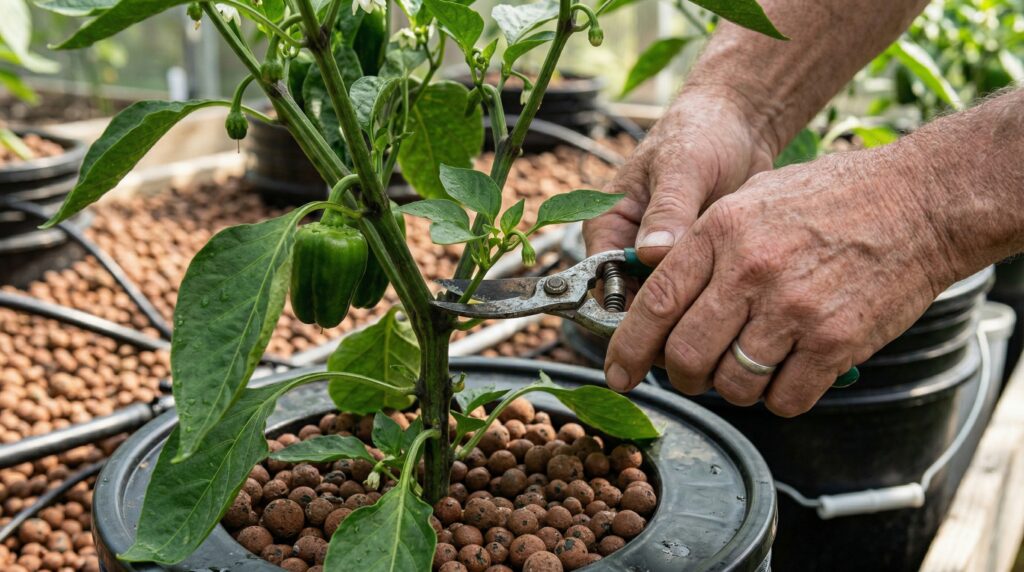
Prune with purpose. Remove lower leaves to improve airflow and reduce the chance of fungal problems. Trim non-fruiting branches so the plant focuses its energy on producing bigger, better peppers.
Adjust your feeding. As plants shift from growing leaves to growing fruit, reduce nitrogen and increase potassium and phosphorus. This transition in nutrient balance is one of the keys to a generous harvest.
Help with pollination. Bell peppers are self-pollinating, but indoors they don’t have wind or insects to move pollen around. A gentle shake of the plant or a quick pass with a soft brush across open flowers does the trick.
Harvest at the right time. You can pick peppers at any stage, but letting them fully ripen on the plant brings out their best flavor and highest nutritional value. Firm, fully colored peppers are ready. And here’s a bonus: regular harvesting encourages the plant to keep producing.
A Quick Look at Varieties
Not all bell peppers are the same, and choosing your variety is part of the fun:
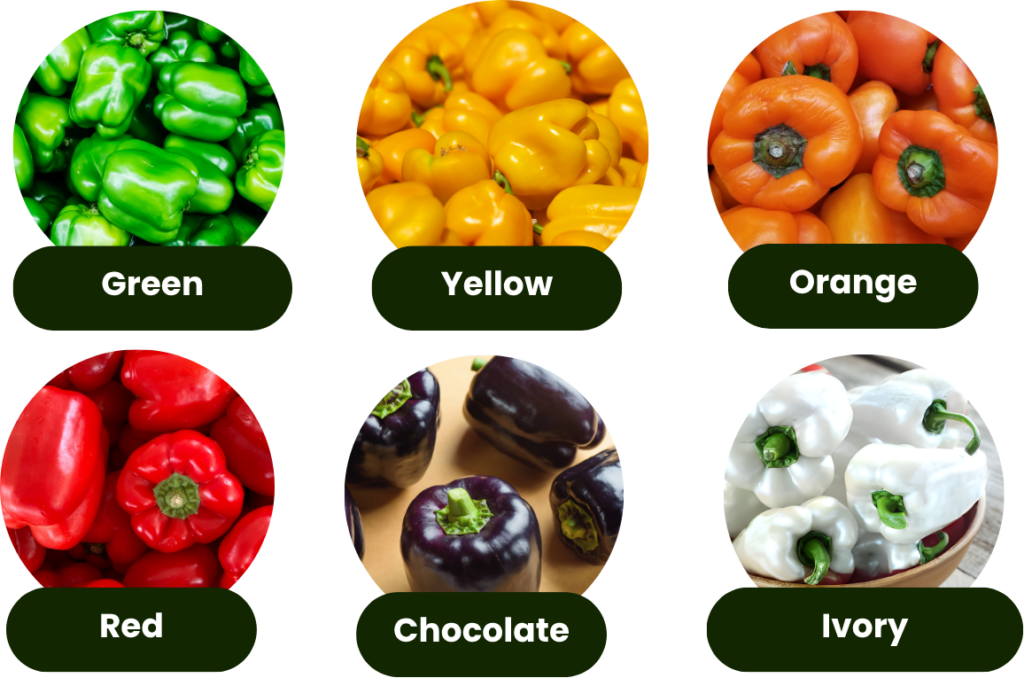
Green peppers are simply unripe versions of other colors. They’re mild with a slight bitterness, and they’re perfectly fine to eat, just less sweet.
Yellow peppers are sweeter than green and packed with vitamin C. They add a bright, cheerful note to any dish.
Orange peppers strike a balance between sweetness and crunch, with high levels of beta-carotene.
Red peppers are the fully ripened version, carrying the highest concentration of antioxidants and vitamin A.
Chocolate peppers have a dark brown skin and a uniquely sweet, slightly smoky flavor.
Ivory peppers are cream-colored, mild, and excellent for stuffing.
Bringing It All Together
Bell peppers reward you for paying attention. The right temperature, consistent nutrients, good light, and a little pruning go a long way toward a harvest you can be proud of. They’re not the fastest crop, but when you bite into a pepper you grew yourself, one that’s sweeter and more vibrant than anything from a store, the wait feels entirely worth it.
Start with one variety, get comfortable with the rhythm, and then expand. That’s the beauty of growing hydroponically: once you dial in the conditions, the system works with you, not against you.