What to Grow First in Hydroponics (and Why It Matters More Than You Think)
Most people who try hydroponics and quit do so within the first two months. Not because the method failed, but because they chose the wrong crop to start with.
Growing a beefsteak tomato as your first hydroponic plant is like learning to drive in a truck. Technically possible, but you’re making everything harder than it needs to be. The smart move is to start with crops that grow fast, forgive mistakes, and actually produce something you can eat within weeks. Confidence comes from harvests, not from reading about them.
The short answer
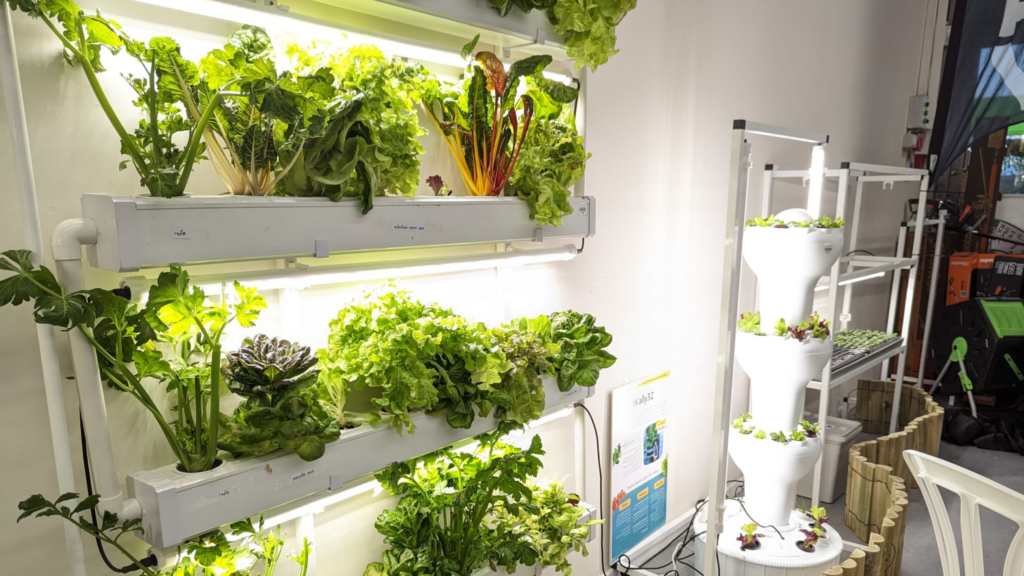
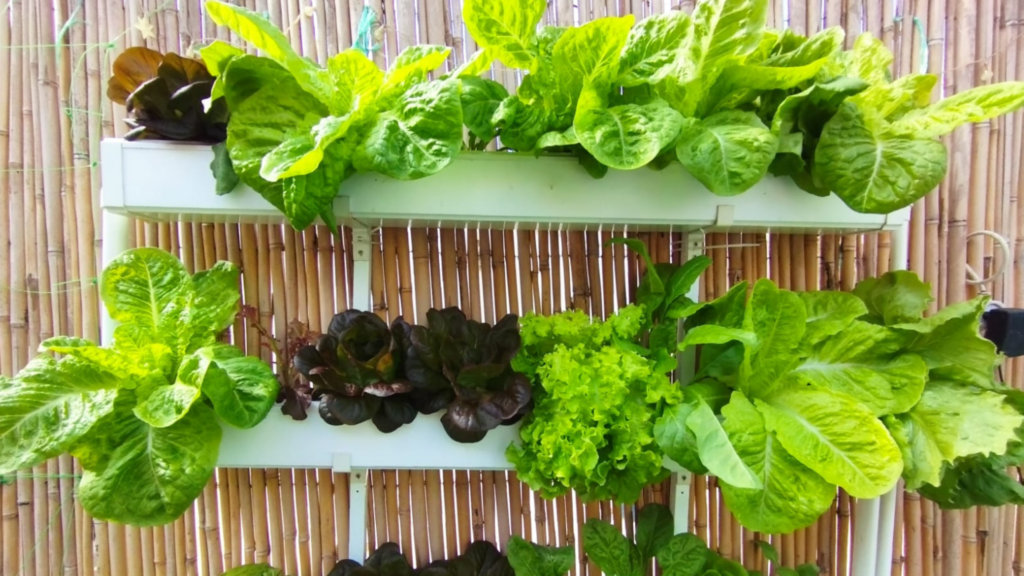
Start with leafy greens and herbs. Specifically: lettuce (any variety), basil, mint, kale, Swiss chard, arugula, bok choy, and cilantro. These crops share three qualities that make them ideal for beginners: they grow fast (3 to 5 weeks to harvest), they tolerate a wide range of nutrient and pH conditions, and they don’t require pollination.
That last point matters more than most guides mention. Fruiting crops (tomatoes, peppers, cucumbers) need flowers to become fruit, and flowers need pollination. Leafy greens skip that entire stage. What you see growing is what you eat.
Why crop choice is really a risk management decision
Every crop has a different tolerance for mistakes. Lettuce will forgive an EC that drifts a bit high, a pH that sits at 6.8 for a few days, or a light schedule that isn’t perfectly optimized. It will still grow. It will still taste good.
A tomato plant, by contrast, will respond to those same small errors by dropping flowers, developing blossom end rot, growing leggy and fruitless, or sitting idle for weeks while you troubleshoot.
The difference isn’t that tomatoes are harder in theory. It’s that they amplify every mistake over a longer timeline. A lettuce crop cycles in 30 days. A tomato takes 10 to 14 weeks to produce its first ripe fruit. That’s 10 to 14 weeks of nutrient management, pH balancing, light optimization, temperature control, pruning, and pollination. If something goes wrong in week 3, you won’t know until week 10.
For a first crop, short cycles and high tolerance are the two variables that matter most.
Tier 1: Almost impossible to fail
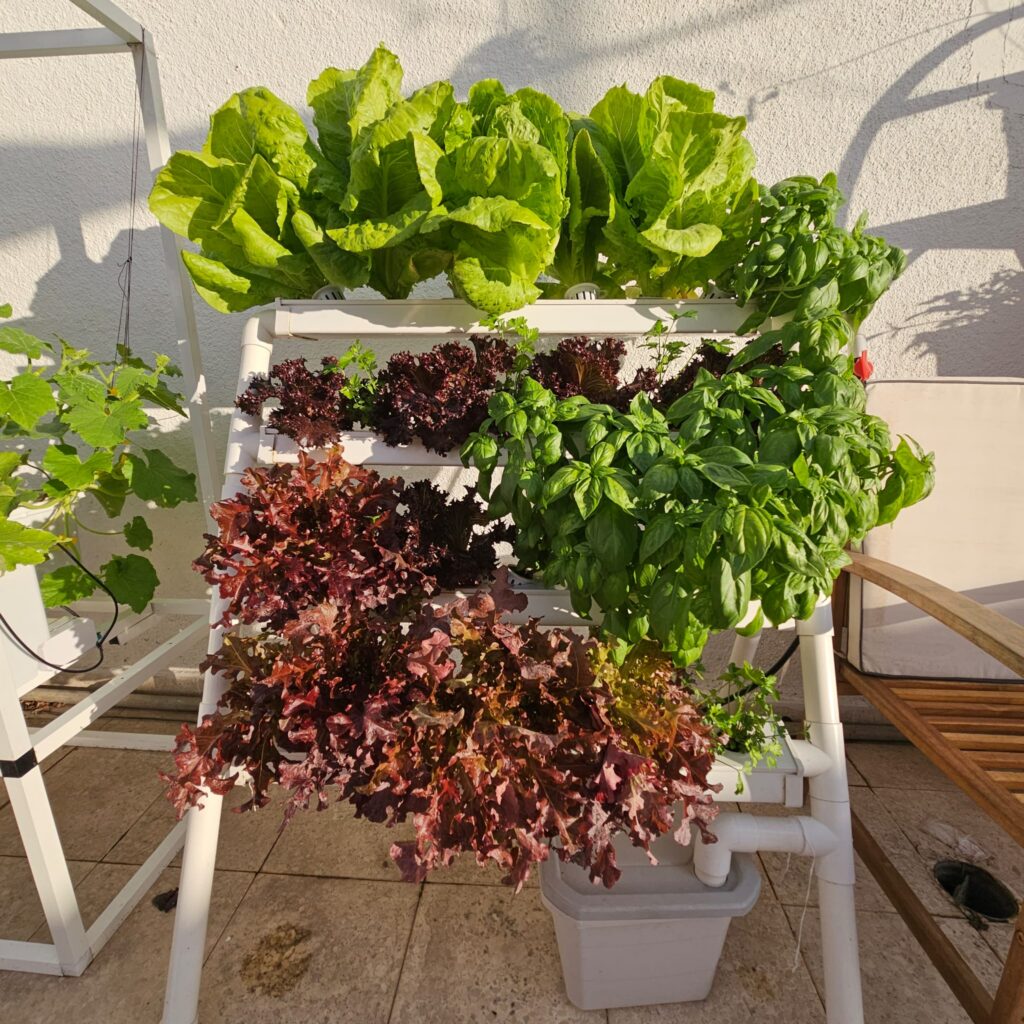
Lettuce (all varieties). Butterhead, romaine, oakleaf, looseleaf. Grows in virtually any hydroponic system, tolerates EC from 0.8 to 1.6, handles pH from 5.5 to 6.8, and produces harvestable leaves in 25 to 35 days. Cut-and-come-again harvesting means one plant can produce multiple harvests over several weeks.
Basil. Slightly higher nutrient demand than lettuce (EC 1.0 to 1.8) but just as fast. Harvest by pinching above a leaf node and the plant branches out and produces more. One basil plant can produce for months with proper pinching technique.
Mint. Grows aggressively in any system. The challenge with mint is keeping it contained, not keeping it alive. Ideal for growers who want an early, visible success.
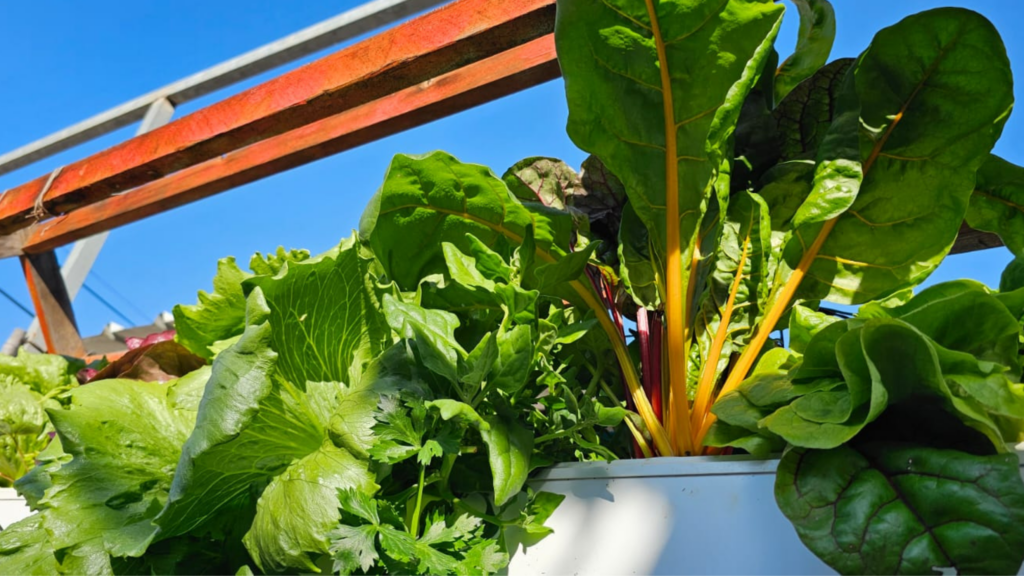
Kale and Swiss chard. Slightly slower than lettuce (40 to 50 days to first harvest) but equally forgiving. Both tolerate temperature swings and light variation better than most crops. Excellent for outdoor hydroponic systems where conditions are less controlled.
Tier 2: Easy with basic attention
Arugula. Fast (21 to 28 days), peppery, and productive. Bolts quickly in high heat, so best for cooler conditions or indoor growing.
Bok choy. Quick-growing Asian green that does well in NFT and DWC systems. Harvest in 30 to 40 days.
Cilantro. Germinates slowly (7 to 14 days) but once established, grows quickly. Bolts fast in heat, so manage light and temperature or grow in cooler months.
Spinach. More temperature-sensitive than lettuce (prefers 60 to 70F / 15 to 21C) but otherwise straightforward. Excellent nutritional value and works well in NFT channels.
Microgreens. Not technically hydroponics in the traditional sense, but worth mentioning. Harvested in 7 to 14 days, require minimal equipment (a tray, water, light, seeds), and deliver the fastest possible “win” for a new grower. Sunflower, radish, pea shoots, and broccoli microgreens are all reliable choices.
Tier 3: Worth trying after your first successful harvest
Strawberries. Rewarding but slow (6 to 10 weeks to first fruit). Need good light, pollination, and runner management.
Cherry tomatoes. The most forgiving fruiting crop. Compact varieties work well in Dutch Buckets. Expect 8 to 10 weeks to first ripe fruit.
Small peppers (sweet or hot). Similar timeline to cherry tomatoes. More heat-tolerant than most fruiting crops.
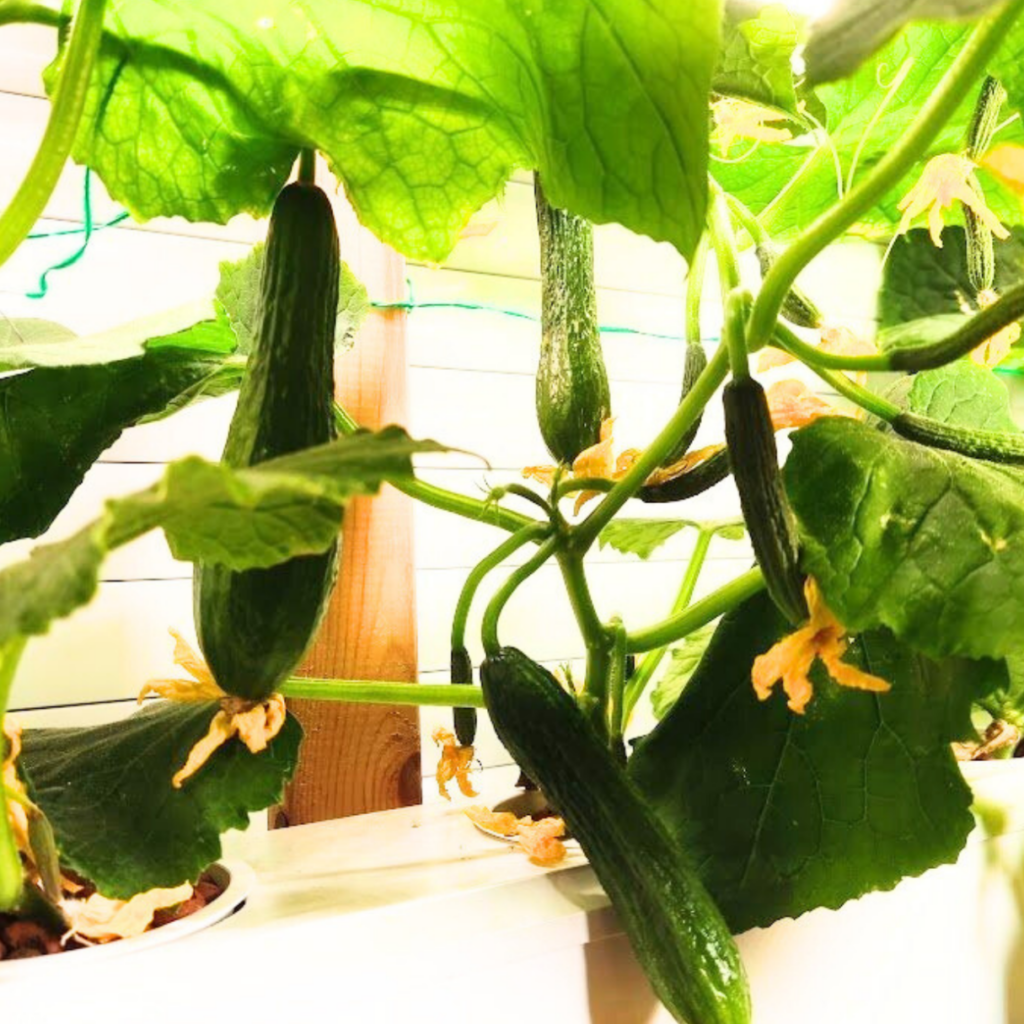
Cucumbers. Fast-growing once established (6 to 8 weeks), but vine aggressively and need support. High water and nutrient demand.
The mistake most beginners make
Ambition. They want to grow tomatoes because tomatoes are exciting, or strawberries because strawberries are expensive at the store. Both are understandable impulses, and both lead to the same place: a beautiful leafy plant that produces nothing for two months, while the grower wonders what went wrong.
Start boring. Harvest fast. Build confidence. Then graduate to the crops that demand more from you. The knowledge you gain growing lettuce (how nutrients behave, how pH drifts, how roots should look, how growth rates respond to light) transfers directly to every crop you grow afterward.
Climate considerations

In hot climates (above 85F / 30C regularly), lettuce and spinach bolt faster. Focus on heat-tolerant greens like Swiss chard, kale, and perpetual spinach, or grow lettuce in cooler months.
In cold climates, most leafy greens tolerate temperatures down to 50F / 10C without significant issues, though growth slows. Indoor growing with supplemental lighting extends the season year-round.
In humid climates, air circulation around the canopy matters more than usual. Fungal pressure increases with humidity, so spacing plants adequately and using a small fan helps prevent problems.
Key takeaways
- Start with leafy greens and herbs. They grow fast, tolerate mistakes, and don’t need pollination.
- Lettuce, basil, and mint are the safest first crops for any system and any climate.
- Fruiting crops (tomatoes, peppers, cucumbers) are not beginner crops. They amplify errors over longer timelines.
- Microgreens offer the fastest possible harvest (7 to 14 days) with minimal equipment.
- The goal of your first crop is to learn the system, not to impress anyone. Start simple, harvest quickly, then expand.